
A New Command: The Mark of the Authentic Christian - My Maundy Thursday Memo to Spanish River Church and Friends
The Church has never been a gathering of the already-perfected. It has always been, and will always be on this side of eternity, a hospital for sinners, a ragged collection of people who sometimes betray and sometimes deny, who struggle with pride and cowardice and all manner of ordinary human failure. If you have spent any time in a church — including this one — you already know this. It is not news.
But here is what is news. Here is what cuts against the darkness of that room like a lamp in a window.
Jesus, knowing all of it — the betrayal already in motion, the denial already forming in Peter's chest, the scattering that was only hours away — Jesus gave them the mandate anyway. Love one another as I have loved you.

Fire on the Mountain, Commandments Nine and Ten: Hosanna to the Son of WHO???
Passover week has just begun. A stranger is riding into Jerusalem, and exuberant crowds are hailing his arrival. They spread their cloaks on the road and cried out a name that ought to stop us cold: "Hosanna to the Son of David!"
That name. How?
How can the Messiah bear the name of an adulterer and a murderer?
How do we sing his Psalms?
How do we treasure his prophetic words?
How does any of this hold together?

Fire on the Mountain: the Seventh Commandment
“And that is what some of you were…” (1 Corinthians 6:11)
The Corinthians had messy lives. Sexual sin, broken relationships, distorted desires. Paul names it. He doesn’t pretend it’s fine.
But then comes one of the most important words in the Bible: “But.”
“But you were washed. You were sanctified. You were justified in the name of the Lord Jesus Christ and by the Spirit of our God.”
That one word changes everything.
The gospel doesn’t ignore the past. It interrupts it. It breaks into the present with a future we didn’t earn and don’t deserve.

St. Patrick, a Morning Prayer, and Saving Civilization
Since my middle name is Patrick and my last name is Cassidy (or “O’Cassidy” as it once was styled) - a name from the misty peatlands, drumlins, streams, and forests of Co. Fermanagh - I hope you’ll forgive me this St. Patrick’s Day for commending to you a book with the title “How the Irish Saved Civilization”, by Thomas Cahill… and a morning prayer to accompany your green fashions today.

Fire on the Mountain, the Sixth Commandment - Murder Not!
The sixth commandment is not merely about avoiding violence. It calls God’s people to protect and cultivate life. A murderous philosophy motivated the Nazi regime, but it has its contemporary co-belligerent in the work of Princeton ethicist Peter Singer. His radically anti-Christian view that belittles the idea of humans as God’s image bearers, a view he refers to as “speciesism”, leads him to conclude that the newly born infant is not fully human - only potentially so, that a human infant is no different than a pig and must prove to the parents that he’s worthy of life. This massive deception is creeping into mainstream thinking and affects the Church as well. Against it, we affirm a Biblical anthropology and choose life.

Fire on the Mountain. The Fifth Commandment, Part Two: Raising Children in the Paideia of the Lord
Paideia means more than discipline. It refers to whole-life formation. The shaping of a person’s values, loves, habits, instincts, and imagination. It’s the deep work of enculturation.
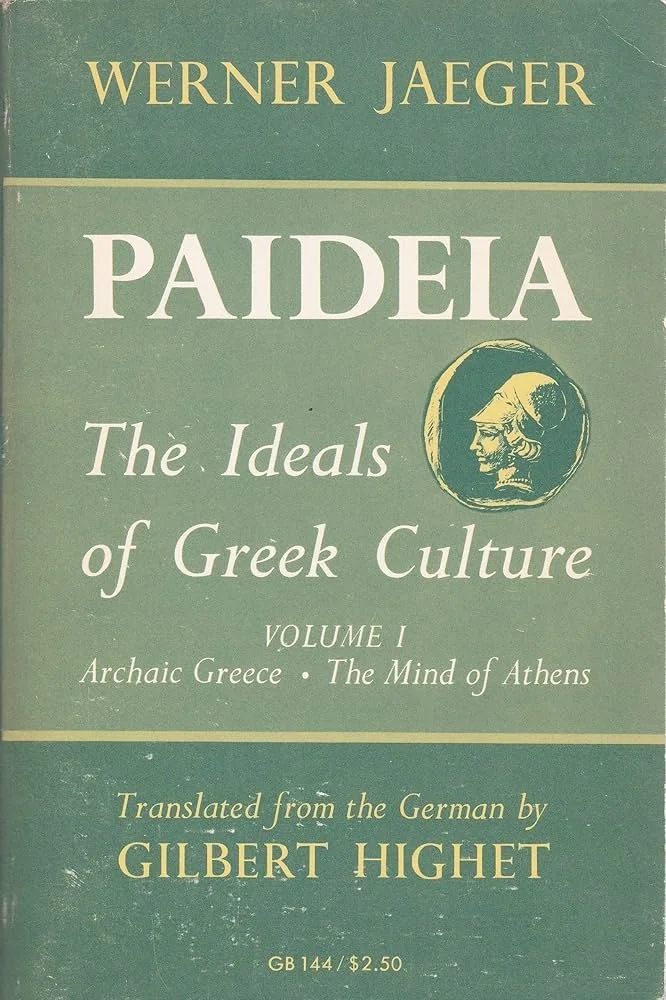
Paideia of the Lord: A Vision for Kingdom Culture in Our Homes
Paul takes a word that once aimed at forming citizens for the empire and redirects it toward forming heirs of the kingdom, the citizens of heaven on earth.

Fire on the Mountain: Honor Your Father and Your Mother
The Ten Commandments are not thin rules. They are seeds. Each contains an entire moral world inside it.
Just as the command not to bear false witness includes gossip, slander, flattery, and manipulation, so the command to honor father and mother stretches far beyond childhood obedience. The bare command does not exhaust its meaning.
It will take time to unpack even the surface issues. There are two main angles here.
First, honor and respect. That is the view from the child’s position, or more broadly, from anyone under authority.
Second, “raising” up. Paul uses the word paideia in Ephesians 6. It means discipline, training, and formation. That is the view from the parent or authority position.
Honor and formation. These two realities are central to how the kingdom of God becomes visible in the world.

Ash Wednesday Homily
“I dwell in the high and holy place, and also with him who is of a contrite and lowly spirit.”
The word contrite means crushed. Broken. Not theatrically ashamed. Not self-hating. But pierced. Awakened. Humbled.
There is a world of difference between shame and contrition.
Shame says: I am worthless, so I hide. Shame looks for fig leaves and weaves a new runway-worthy clothing line.
Contrition says: I am sinful, so I come. No more hiding. No more pretending. No more minimizing. I can’t save myself; I must have a Savior.
Ash Wednesday is not about groveling before a reluctant God. It is about coming honestly before a gracious one.
Notice the promise: He dwells with the contrite.
Not tolerates. Not endures. Dwells.
The high and holy God makes His home with the humble.

This and That - An Update
Some personal news and a word about some upcoming preaching and teaching, along with an invitation to check out the Alliance for Mission and Renewal in the PCA.
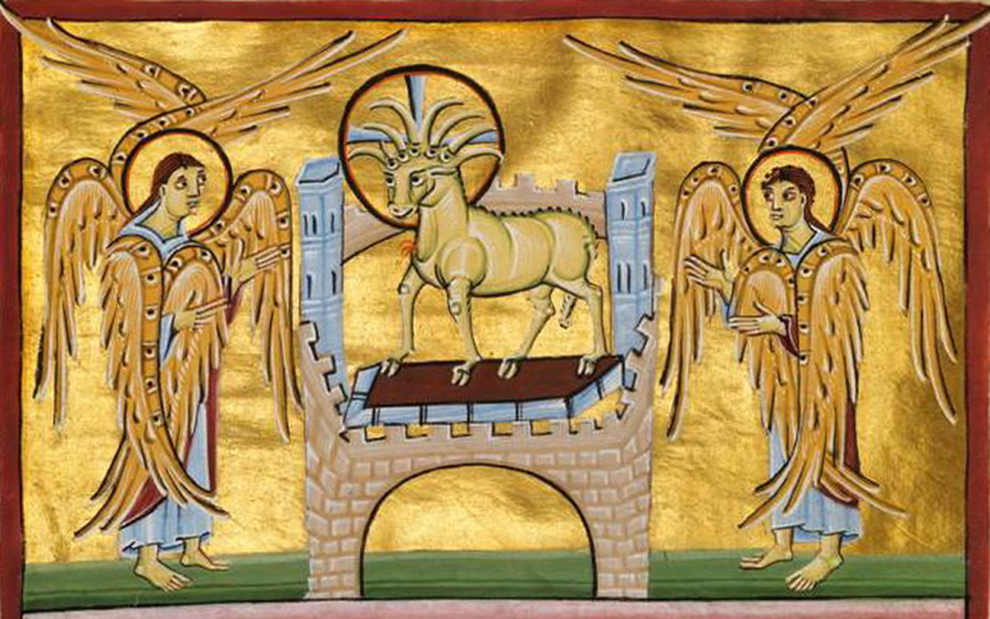
An Interpretive Manifesto for Reading and Teaching Revelation
Over the years, I’ve been asked many times to preach the Book of Revelation and, while I have often preached from it, I’ve never preached through it. There are a lot of reasons for that, not the least being the weird sensationalism that some people bring to the book. But I find myself considering doing so now, maybe in the winter of 26-27, though I’m not sure if I would do so on Sunday morning or a new worship service in the evening. This article simply lays out how I approach Revelation.

Fire on the Mountain (Part 4): Bearing the Name Without Denying Its Beauty and Power
The exposure of our many sins can and should lead us to a renwed daily repentance, a firmer reliance on grace, and a determined prayer that God the Spirit would sensitize our hearts to the abuse of God’s name, strengthen our faith to proclaim his Name, and deepen our reverence for his Name in worship, joining the Psalmist to exclaim, “O Lord, our Lord, how excellent is your Name in all the earth!”

Justification, Sanctification, Discipleship and the Law
In this framework, both antinomianism and legalism are refuted, and a rich gospel proclamation is reinforced, together with discipleship shaped by the whole counsel of God. Grace does not cancel moral responsibility. It reinforces it and drives it home.. Because salvation unites believers to Christ, a life increasingly shaped by his love is the expected result.

Fire on the Mountain, the Second Commandment: Authentic Worship
Idols aren’t hard to find.
If we could run an echocardiogram on our souls, they’d show up quickly. Career. Comfort. Politics. Control. Approval. Pleasure. Even religion itself can become an idol. That’s why God doesn’t just say who to worship. He tells us how. Because left to ourselves, we will always redesign worship to suit our preferences. We’d make God in our image and worship that image the way we find fulfilling.

Fire on the Mountain, Introduction: Why the Ten Commandments Still Matter
In Exodus 19–20, God gives the Ten Commandments. For many Christians today, that moment feels distant, confusing, or even irrelevant. Some see the Law as a relic from a harsher era. Others see it as a ladder to climb toward God. Still others quietly assume it doesn’t matter anymore.
All of those views are profoundly mistaken. Let’s learn the Ten Commandments and learn how God uses his Law to direct us to Christ and teach us his wisdom.

Fire on the Mountain: The First Commandment and the God Who Loves Us First
The first commandment is deceptively simple. It sounds obvious, even tame. Of course, God should be first. Of course, we shouldn’t worship idols. Most of us hear it and nod along. But the truth is this commandment, rightly understood, confronts the deepest loyalties of our hearts. It exposes what we actually love. And if we allow it to do its work, it will change our lives from the inside out.

Looking for Revival, Part One
“It’s too soon to announce a change to the direction of secularism... but I’ve never seen anything like this.” - Ed Stetzer
Lessons from Lazarus’ Tomb
“This illness is not unto death, it is for the glory of God.” That’s a sentence most late-modern people - even Christians - will stumble over. How can our pain, our suffering, and that of those we love, glorify God? Surely the absence of pain, sorrow, and ease of life is what God wants for us, right? Wrong!

The Seventh Sign - Christ Raises Lazarus from the Dead
Wrapped in grave clothes, stumbling into the sunlight, Lazarus becomes living proof that Jesus is more than a teacher or a healer—he is the resurrection and the life.
But this moment wasn’t just for Lazarus. It was a sign—the final and most dramatic of seven signs in John’s Gospel, pointing us to who Jesus is and what he came to do.